
We Need This Connection: New PEPS Peer-Support Group Brings Military Parents Together
PEPS partnered with Sistema Escolar USA and other community organizations to bring culturally relevant peer support to Spanish-speaking and immigrant families raising teens.
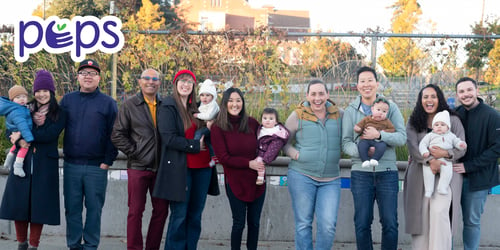
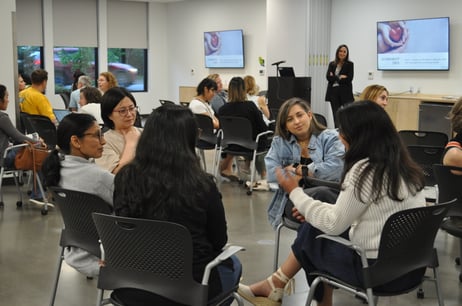
Parenting a teenager comes with real challenges: mental health worries, social and digital pressures, and the complexities of identity development. For immigrant families and other historically underserved communities, language and cultural differences can make those challenges even harder to face alone. This is the story of how PEPS partnered with community organizations to bring the Program for Parents of Adolescents and Teens (PAT) to more families, in the languages and cultural contexts where they live. The PAT Program offers peer support groups, where families gather in person or virtually with a trained Group Leader every week for four or nine weeks to connect, learn alongside each other, and find support.
Reaching Spanish-Speaking and Immigrant Families
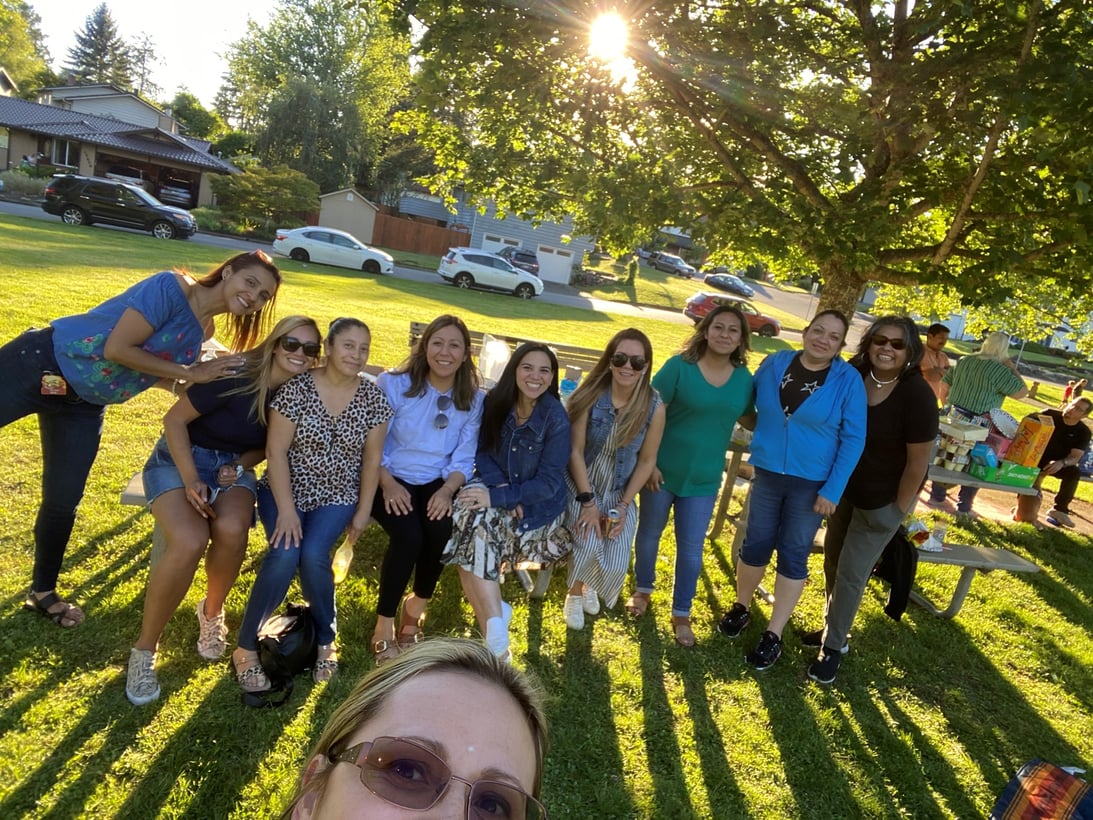
Since 2021, PEPS has partnered with Sistema Escolar USA to offer PAT groups designed for Spanish-speaking families. The partnership involved transcreating the PAT program, not just translating it, but adapting it to reflect the cultural context of Hispanic families. Liliana Medina, founder of Sistema Escolar USA, explained why this mattered to her:
“I wanted to bring this to the Spanish community because I needed it when I was raising my own child. I didn't have access to any program like this and all the resources were in English."
Sistema Escolar now offers PAT groups virtually, reaching families in other states and even internationally. Since 2024, PEPS has expanded its PAT partnerships to include NAMI Eastside, ChildStrive, and Mercy Housing, enabling in-person meetings in Spanish. New collaborations with Empower Youth Network and The Circle extended the program to families on the Eastside and in Snoqualmie Valley. PEPS also grew its English-language groups through partnerships with Hamlin Robinson School and Launch, tailoring the program for neurodiverse kids and low-income families.
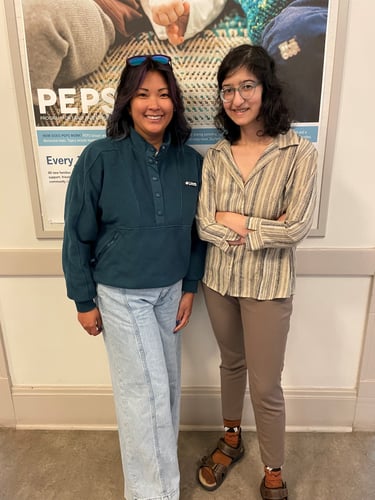
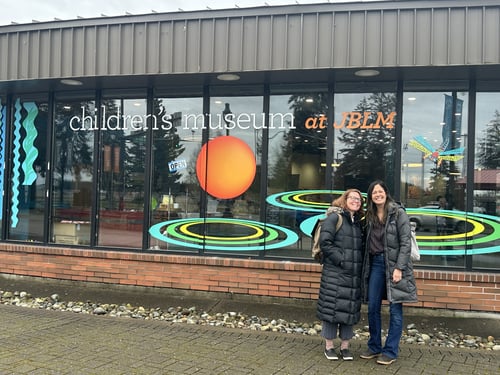
This year, PEPS has also collaborated with the Lake Washington Parent Teacher Student Association (LWPTSA), King County Library in Newport Way, Girl Scouts, and Summit Sierra School on community workshops, and continues to seek new partnerships to expand PAT into other languages and communities.
Building a Supportive Community
The PAT Program fosters a sense of community among participants, encouraging parents to share experiences and support one another. Isis Lara, an educator and now a PAT Group Leader for Launch, reflected on the program's impact: "As an educator, I have seen the side of the administration, students, and teachers. The group allowed me to learn the parents' perspective." She also noted that "families were not afraid to go deep to share experiences, and that helped to learn a lot."
These shared experiences point to the program's core philosophy: the wisdom is in the room. Participants have reported real personal growth and improved family dynamics. One parent described a shift in how they think about parenting:
"Now I can understand better that raising a child is not just like directing the traffic, like giving orders and do this, do that. Raising a child is more like taking care of a garden."
Another parent found the group gave them a safe space to be honest:
"In this space that the PEPS program provided for me, I could be really raw, and I could really ask for the help that I needed without having to pretend that everything is fine."
Romy Romero, Bilingual Program Coordinator for NAMI Eastside, put it simply: "It was not only education, it was community connection." The PAT Program gave Hispanic families an opening to talk about mental health, a topic Romero said families are eager to explore further. She was surprised to see that half the group's attendees were fathers. "People did not have the information before," she said, "so the program was very relevant."
Why Peer Support Matters Now More Than Ever
In his 2024 advisory, Parents Under Pressure, former U.S. Surgeon General Dr. Vivek Murthy named disconnection as a public health crisis, especially for parents. Community connection, he wrote, is not a luxury, it's a necessity. Creating accessible spaces where parents can share experiences, build relationships, and receive support can dramatically reduce feelings of isolation and burnout.
Dr. Murthy's advisory also makes the case that when adults are mentally and emotionally supported, they're better equipped to care for and nurture their children, and he calls on organizations to build safe, inclusive spaces where parents can connect, find resources, and feel less alone. PEPS and its partners are answering that call, building trusted, culturally relevant support systems that help families thrive. As one partner put it:
"On these days with social insecurity that Hispanics are facing, creating spaces where they can talk about mental health is more needed than ever."
Take This With You
Different communities face different stressors, but everything becomes easier when we do it together. When we offer safe spaces for caregivers to seek support, we're not only helping them, we're also showing the next generation that asking for help is a strength, not a weakness. We're showing them the value of surrounding themselves with a trusted community through life's challenges.

 About the Author
Gloria Martinez (she/her/ella) is the Program for Parents of Adolescents and Teens (PAT) Bilingual Outreach Manager at PEPS. She has a passion for building tools that support families and create meaningful change in the communities they serve. Her experience as a psychologist across different countries and communities, combined with her perspective as a parent, has deepened her conviction that connection is the foundation for collective growth and lasting impact.