
Helping New Parents – and Parents of Multiples – Find Their Way
Mental health is not just about knowing when to ask for help. It is about creating the conditions that enable our young people to thrive.
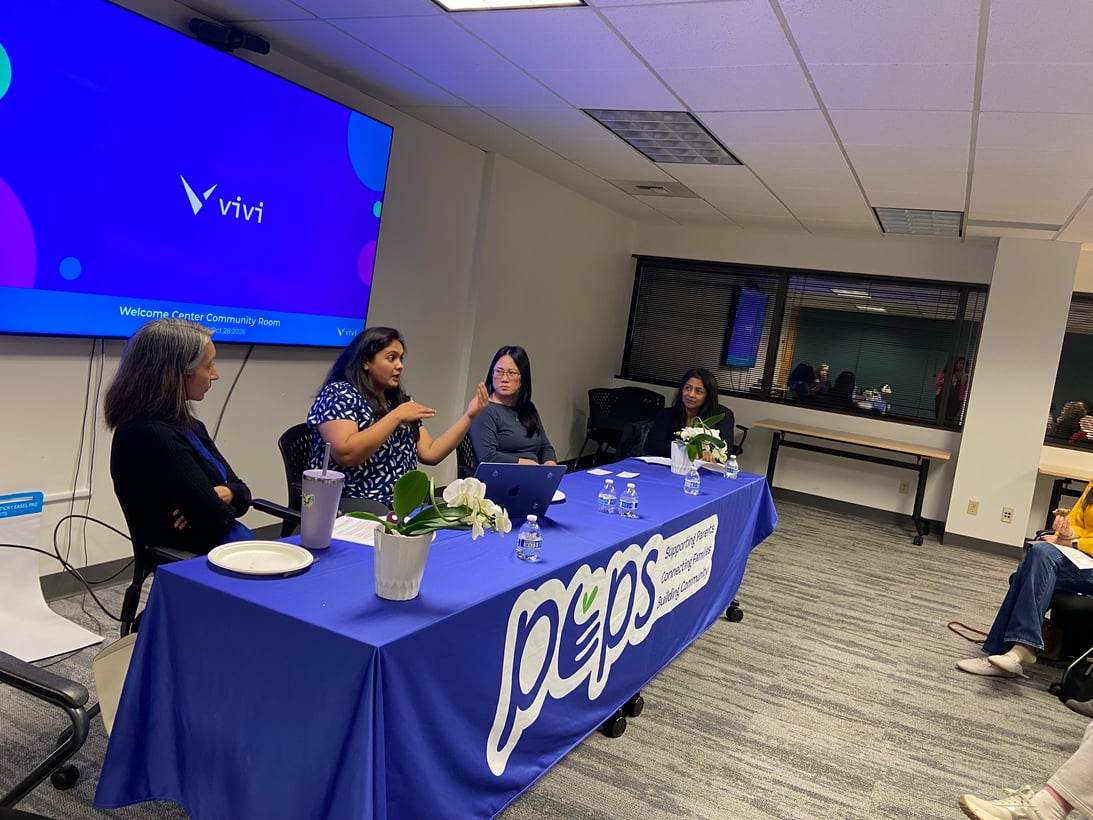
One of the most meaningful parts of organizing our Parents of Adolescents and Teens (PAT) event, Mental Health Across Cultures: Building Resilience in Our Youth, was creating a space where international parents living in the Seattle area could come together to listen, ask questions, and share their experiences raising teenagers in a culture that is sometimes very different from the one they grew up in.
As I listened to parents share their stories, I was reminded of how much we need these conversations.
Parents expressed concerns about their teenagers' mental health and the challenges of navigating an unfamiliar healthcare system, and the difficulty of finding specialists who understand their family's cultural background and values. Some spoke about feeling misunderstood and facing cultural biases or struggling to find support that considers not only the teenager but the entire family.
Our panelists, Lolita Aguiñaga, Runjhun Pandit, and Grace Lim, helped us view youth mental health from a broader, more positive perspective. Rather than focusing solely on mental health during a crisis, we discussed the importance of building emotional well-being, resilience, and connection every day.
Some important takeaways from our conversation included:
- Understanding mental health beyond a diagnosis. Mental health is an important part of our overall health. It includes our emotional, psychological, and social well-being. It affects how we think, feel, behave, manage stress, build relationships, and cope with life's challenges
- Knowing what to look for. Adolescence naturally brings mood changes, a greater need for independence, and occasional conflict. However, persistent changes in sleep, eating habits, friendships, school performance, energy, or behavior deserve attention, especially when they interfere with daily life. Withdrawal, hopelessness, or losing interest in things they once enjoyed may signal that a teen needs additional support.
- Creating safe conversations at home starts with knowing that parents don't need to have all the answers. Listening without judgment, staying curious instead of correcting right away, acknowledging feelings, and showing that mental health is nothing to be ashamed of can make a real difference.
- Recognizing the impact of culture. Raising teenagers across two cultures brings both opportunities and challenges. Young people may benefit from multiple perspectives and a strong sense of identity, while also facing conflicting expectations, pressure to belong, and difficulty communicating with parents who grew up in a different cultural environment.
- Finding the right support matters. When a teenager needs additional help, it is essential to find a specialist who understands the family's cultural background, listens without assumptions, and addresses the young person's needs. Sometimes the first professional may not be the right fit. Parents should feel empowered to ask questions, seek other opinions, and keep looking until they find someone they trust.
Perhaps one of the most powerful parts of the evening was hearing parents discuss the importance of becoming advocates for their children.
Navigating systems, finding resources, asking questions, and building relationships with professionals can feel overwhelming, especially when families are already dealing with so much. Yet, as some parents have beautifully expressed, we need to build our own “village”.
A network of people who listen, understand, share resources, open doors, and remind families that they are not alone.
This is why spaces like the PEPS community events and groups matter.
They help parents see that they’re not alone in their struggles, learn from one another, and recognize the value of their voices and experiences. They also remind us that supporting youth mental health isn’t the responsibility of healthcare providers alone; it takes families, schools, healthcare professionals, and community organizations working together.
I’m grateful to our panelists, the parents who shared their stories with us, and everyone who helped make this conversation possible.
I am especially grateful to be part of an organization like PEPS, where we can create opportunities for families to connect, learn, and build the support networks they need.
Raising emotionally healthy young people takes more than individual effort. It takes a community.
 About the Author
Gloria Martinez (she/her/ella) is the Program for Parents of Adolescents and Teens (PAT) Bilingual Outreach Manager at PEPS. She has a passion for building tools that support families and create meaningful change in the communities they serve. Her experience as a psychologist across different countries and communities, combined with her perspective as a parent, has deepened her conviction that connection is the foundation for collective growth and lasting impact.
