
Expert's Biggest Screen Time Advice: Be Proactive
Imagine driving 3 hours a day to take your child to school or a playdate with a classmate. That’s the reality for many Hamlin Robinson School families, who make the drive from north of Everett, Tacoma, Vashon Island, or Bellevue to Beacon Hill so that their elementary or middle schooler can attend this school. All in all, the school covers an astonishing 75 zip codes.
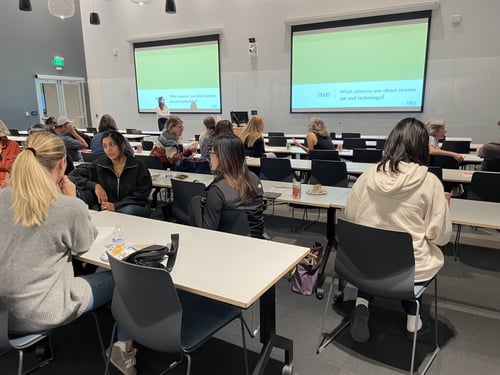
All of these families have good reason to travel far distances: the 45-year-old school is the only school in Washington state that serves students with dyslexia and other language-based learning differences. The school’s Learning Center was created as the community outreach arm of the school – it provides student services, such as test prep, tutoring, as well as year-round professional development for faculty and staff. It also houses the Hamlin Robinson PEPS Parents of Adolescents & Teens (PAT) Groups – four a year, some in person and some virtual, focused on parents of neurodiverse children.
“We’re always talking about the students; nobody is supporting the parents in that way in their journey,” said Roderic Walton, head of the Learning Center, said of the school’s idea to enter a partnership with PEPS. “Parents of neurodiverse children are no different from other parents with the ebbs and flows that teenagers have – but there’s another layer when you have a child who has a learning challenge.”
While the school’s PEPS Groups follow the same curriculum and mission as others, connecting about this additional “layer” is what makes the Hamlin Robinson School groups stand out, said Polly Jirkovsky, Partnerships Manager at PEPS.
“The best part of the PEPS/Hamlin Robinson partnership is the dedication to offering support to families with kids who have learning differences,” she said. “It’s about giving those families a space to connect and share their specific joys and struggles.”
Erin McDougal, a Hamlin Robinson 5th grade teacher, facilitates the groups, and she has an interesting connection to PEPS – her own mother was a longtime PEPS facilitator. Though the Learning Center runs these groups, they aren’t exclusive to the school’s families – anyone can join.
“There are some families [joining the groups] that might have had newly-diagnosed neurodiverse kids and they’re having communication issues,” Roderic said. “[Group members] have really enjoyed it – people tell us they’re just glad they have access to a group of parents to have honest conversations about their unique struggles with their kids.”
Hamlin Robinson offers PAT Groups in fall, winter and spring. Contact the school for more information.
Interested in partnering with PEPS? Learn more.
Tags: